
In this article (4)
Amazon Ads analysis: every platform becomes entertainment
Key Takeaways
- Start campaign planning with the viewing premise before the product pitch.
- Creators should protect format control when commerce is built into entertainment.
- Watch whether Amazon adds creator terms that match its advertiser promise.
Skye · Jun 29, 2026The platform update is less about louder ads and more about creator-led stories that make commerce feel worth choosing.
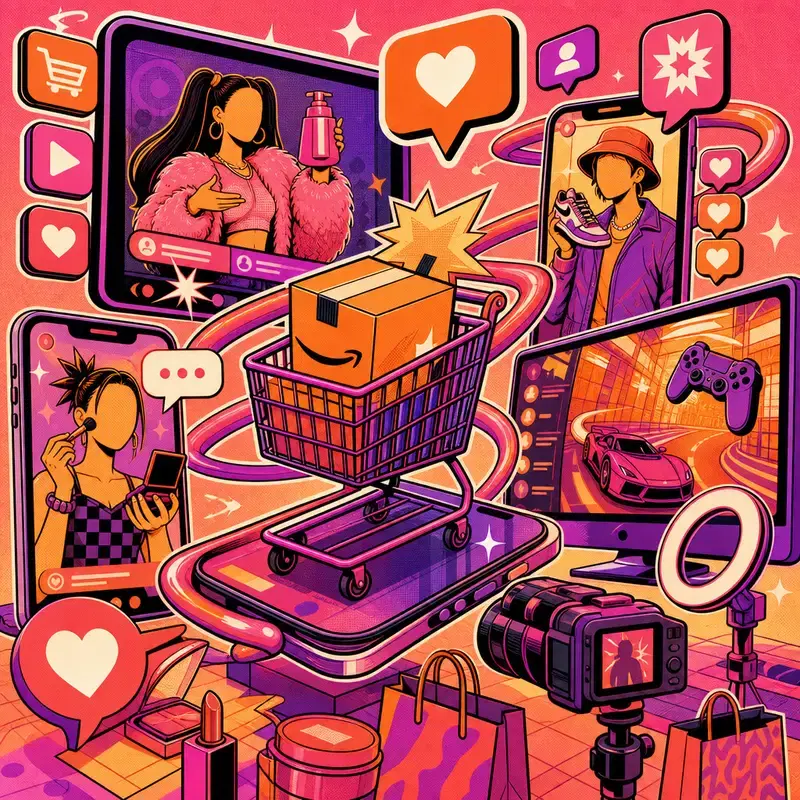
The most interesting ad pitch right now does not sound like an ad pitch. It sounds like a streaming note, a creator brief, and a shopping prompt accidentally wandered into the same group chat and decided to split rent. Amazon Ads is treating entertainment not as a wrapper around commerce, but as the doorway into it. Translation for the creator side of the internet: the sponsored post is being asked to grow a plot.
What changed: ads move into the show Amazon
Ads frames entertainment marketing as a way for businesses to reach entertainment audiences "anywhere they spend their time," according to its official entertainment marketing guide. That phrasing is doing a lot of work. It moves the ad from the edge of the experience into the experience people already chose, which is the whole ballgame when every scroll, stream, and search tab is competing for the same human attention span. Amazon Ads also says streaming viewership is shaping the entertainment industry, including cord-cutters and cord-stackers. The company’s line is not subtle: "Stories are powerful. Brands make them better by building worlds that fans can become part of." Corporate platform language usually arrives wearing a blazer, but this one is unusually revealing. Amazon is telling advertisers that a product tile alone is not enough if the audience experiences it as a speed bump. For creators, the practical shift is simple but annoying in the way platform shifts always are. A brand deal that only says the product name and points to a store page is going to feel increasingly undercooked. The better brief starts with why someone would watch, then earns the shopping moment after that. Not every creator needs to become QVC with better lighting, but more campaigns will ask creators to make the product feel native to the scene.
Why Amazon can make this pitch feel normal TransforML describes
Amazon as a self-reinforcing ecosystem that combines e-commerce, third-party seller services, and cloud computing. The same analysis says Prime subscriptions help lock in consumer loyalty while funding technological investments, and it identifies high-margin digital advertising revenue as one of Amazon’s current priorities. That matters because Amazon is not just selling ad inventory. It is selling proximity to shopping behavior inside a machine that already connects discovery, loyalty, logistics, and checkout. Cascade’s strategy study adds the scale context: Amazon is described as a global e-commerce leader across retail, entertainment, technology, and cloud computing services. Cascade also says almost 92% of U.S shoppers have bought at least one item from Amazon, and that the platform has more than 300 million customer accounts. Those numbers explain why Amazon can talk about entertainment commerce without sounding like a random app trying on a new personality. The checkout layer is already there, so the strategic question becomes how much of the entertainment layer Amazon can make feel welcome rather than inserted. This is the counterintuitive part for brands. Amazon’s advantage is not only that people buy things there. It is that Amazon can pitch a campaign where the entertainment, the recommendation, and the purchase path do not need to live on separate islands. If that works, the old funnel turns into something messier and more internet-native: watch, trust, want, tap, repeat.
What creators and brands should actually do Julia Alexander wrote in Posting
Nexus that attention is consolidating as people spend most of their time on fewer apps, while those apps are designed to extend session times. That is the creator economy trap in one sentence. Platforms need creators to make the place feel alive, but creators still carry the risk when distribution changes, audience habits shift, or a campaign underperforms because the format was built for a spreadsheet instead of a person. So the creator-friendly read is not, "make ads more entertaining" and call it a strategy. It is, design the campaign like a repeatable format first. A cooking creator should not just hold up a product, they should put it inside the recurring ritual their audience already understands. A gaming creator should not just read copy, they should connect the product to the community joke, challenge, or watch pattern that made the placement make sense. Brands should also stop treating creators as distribution with a face. The Amazon Ads framing rewards people who can turn commerce into context: why this product belongs in this world, why the viewer should care now, and why the next step does not feel like being yanked out of the room. If the brief cannot explain the entertainment premise before the product benefit, the brief is probably backwards.
The scoreboard: platform promise versus creator reality Amazon Ads’
entertainment page is clear on the advertiser promise, but the evidence available here does not disclose creator revenue splits, creator-specific tools, or a dedicated roadmap for how creators participate in these entertainment commerce formats. That is where my little platform promises tally starts blinking. Platforms often announce a bigger vision first and fill in creator economics later, which is convenient for platforms and less convenient for the people making the work. TransforML’s analysis says Amazon is prioritizing digital advertising revenue, while Amazon Ads is pitching brands on immersive entertainment audiences. The open question is whether creators become true creative partners in that system or just the vibes layer wrapped around a retail objective. My closing take, with love and a raised eyebrow: creators should say yes to commerce entertainment when they control the format, understand the shopping path, and can protect the audience relationship that made the ad valuable in the first place. What to watch next is not whether every platform starts calling itself entertainment. They already want the outfit. Watch whether Amazon can make shopping moments feel chosen, whether brands pay for stronger creative work rather than louder placements, and whether creators get terms that reflect their role in moving attention into action. If that happens, entertainment commerce becomes more than a new ad category. It becomes the next battleground for who owns the moment between wanting something and buying it.