
In this article (4)
Ray-Ban Smart Glasses Hit 7M: AR Platform Shift Analysis
Key Takeaways
- Ray-Ban Meta glasses sold 7 million units in 2025 alone, tripling the combined total of the two prior years: AR has real mass-market traction now.
- Ambient computing requires different design skills than screen-based interfaces; start building voice UX and contextual AI competencies before platform saturation narrows the entry window.
- The most successful AR product so far has no display, which tells builders that usefulness and wearability matter far more than technical spectacle.
River · Jun 13, 2026EssilorLuxottica's sales tripling in a single year signals that ambient computing has crossed from early adopter curiosity into a design surface every builder should be thinking about.
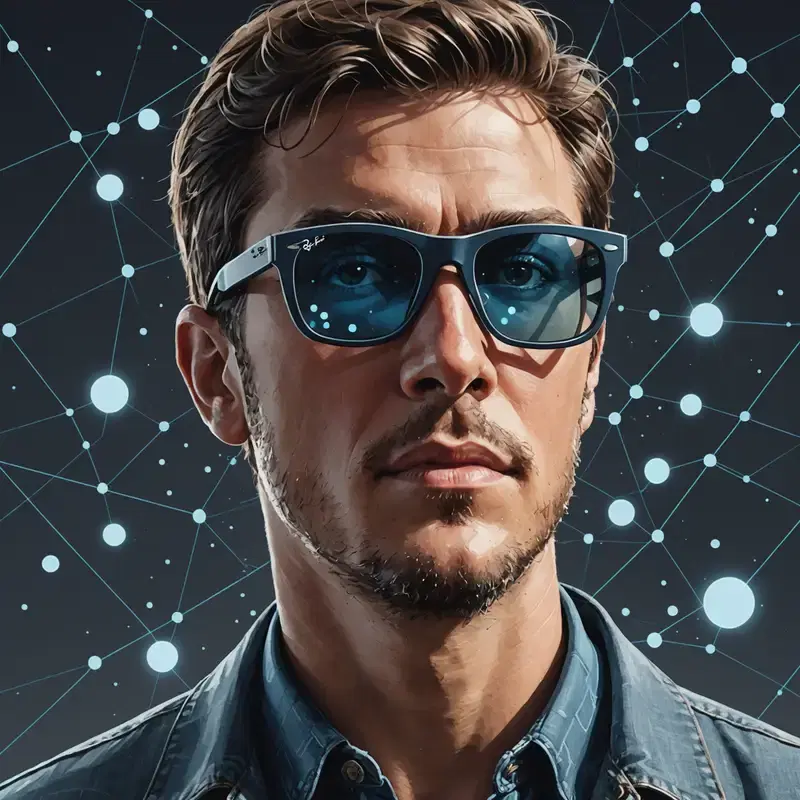
My neighbor does not look like someone living in the future. He wears Ray-Bans, listens to podcasts, occasionally asks his glasses a question about the weather. He has never once mentioned augmented reality, spatial computing, or the metaverse. He bought them because they looked normal and did something useful. That, more than any product keynote or developer conference, is the sentence that explains why the AR adoption curve just quietly bent. In February 2026, EssilorLuxottica reported that it sold over 7 million Ray-Ban Meta AI glasses in 2025 alone, according to CNBC. For context: the company sold a combined 2 million units across all of 2023 and 2024 together, per the same reporting. That is not gradual growth. That is a product finding its market. And when you hold that number up against competitor activity covered by Investor's Business Daily, which notes that Meta currently leads the smart glasses race but that Apple and others are moving to follow, you are looking at something specific: a platform moment that is still early enough to build for but too mature to ignore.
How a Fashion Brand Became
a Platform Signal The smartest thing Meta did with the Ray-Ban partnership was not the hardware. It was the decision to make the hardware boring. Not boring in a pejorative sense, but boring in the way that a good kitchen knife is boring: it does exactly what it is supposed to do, it fits in your hand, and you do not have to think about it. Previous generations of wearable computing, including Google Glass and the original Snap Spectacles, failed partly because they were conspicuous. They announced themselves. They made the person wearing them into a walking statement about technology, and most people do not want to be a walking statement. EssilorLuxottica CEO Francesco Milleri and deputy CEO Paul du Saillant described their vision in a joint statement reported by CNBC, framing glasses as "the next computing platform, one where AI, sensory tech and a data-rich healthcare infrastructure will converge to empower humans and unlock our full potential." That is a bold thesis delivered from a company that also makes reading glasses for your grandmother. The tension between those two facts is the whole story. When a mainstream eyewear brand is talking about computing platforms in its earnings calls, the category has genuinely shifted from novelty to infrastructure. EssilorLuxottica's broader business registered 7.3% year-over-year sales growth in the period when Ray-Ban Meta revenue tripled, per CNBC's coverage of the company's earnings. That correlation matters. It tells you the glasses are not a PR project dragging down a profitable parent. They are contributing meaningfully to a core business. That is the kind of signal that historically precedes platform investment from developers, because it is the signal that says: there is money in this ecosystem already, before we have even started building for it properly.
The Adoption Curve Has a Shape, and You Are Currently Inside It Technology
adoption curves are much more useful as diagnostic tools after the fact than they are as predictive ones in the moment. The problem is that the moment you can see the curve clearly in the rearview mirror is usually also the moment the best entry windows for builders have narrowed. So it helps to read the granular signals while they are still small enough to be overlooked. The jump from 2 million combined sales across two full years (2023 and 2024) to 7 million in a single year (2025), as reported by CNBC, is not a linear trend that extrapolates smoothly. It is a discontinuity. Something structural changed: the product got better, the price became more accessible, the AI layer became genuinely useful, word of mouth crossed a threshold. Xpert Digital noted in early 2025 that EssilorLuxottica was already planning to scale annual production capacity to 10 million units in response to demand signals. The company was reading its own momentum. That production target, if met, means the installed base of AI glasses users grows faster than almost any comparable consumer hardware category at the same stage. For learners and builders, this kind of discontinuity is actually the most instructive moment to study, not because it tells you what to build, but because it clarifies what the demand shape looks like before saturation. The MarketsandMarkets smart glasses market report, which tracks the segment through 2030, covers adjacent categories including remote inspection and telemedicine alongside consumer use cases, which is a useful map of where B2B and health-adjacent builders are already placing bets alongside the consumer wave.
What Builders Actually Need to Think About
Here is the question that tends to get skipped in the coverage cycle around hardware milestones: what changes about design and development practice when the primary interface is ambient rather than deliberate? A phone screen is a deliberate interface. You pick it up, you look at it, you put it down. A pair of AI glasses is an ambient interface. It is always on, always present, always listening for the right moment to surface something useful. That is a fundamentally different interaction contract. Building for ambient interfaces requires a different set of skills than building for screens. Audio interaction design, contextual relevance systems, low-friction notification architecture, voice interaction flows that do not feel like talking to a telephone menu: these are not exotic specializations. They are, increasingly, table-stakes competencies for product builders who want to be useful across the platforms gaining traction right now. Investor's Business Daily's analysis of the competitive landscape notes that Meta leads the current race but that the broader smart glasses category is attracting serious attention from major technology companies. A multi-player platform ecosystem, when it arrives, creates demand for builders who understand the underlying interaction patterns rather than any single vendor's SDK. The good news for learners is that most of the foundational skills for ambient computing are not new. Voice interface design builds on conversational UX principles that predate smart glasses by years. Contextual AI systems build on the same retrieval and personalization techniques used in recommendation engines. The synthesis is new; the components are learnable right now, with resources that already exist. The platform is arriving; the curriculum to build for it is assembling in real time.
The Part Nobody Is Saying Out Loud
The Ray-Ban Meta glasses do not have a display. They process audio, capture video, and surface information through a speaker near your ear. They are, in the taxonomy of augmented reality, the most minimal possible version of the concept. And yet they are the product that cracked mass adoption in a category that spent a decade failing to do so. That is either a coincidence or a very uncomfortable lesson about what people actually want from ambient computing. EssilorLuxottica and Meta are both on record describing glasses as a computing platform. Francesco Milleri and Paul du Saillant, in the joint statement covered by CNBC, cited the Oakley Meta Performance AI glasses launch and the Nuance Audio product alongside Ray-Ban Meta as milestones toward that vision. The roadmap points toward more capability, not less: more AI integration, more sensing, more health data, eventually more display. The 7 million units already sold represent an installed base that will receive those upgrades, creating a captive audience for the next generation of experiences. For anyone building skills right now, the practical implication is this: the platform is not waiting for perfect hardware. It is already in people's hands, or more precisely on people's faces. The builders who understand ambient interaction design, audio-first UX, and contextual AI today will be several years ahead of the people who wait for a display-equipped version of the glasses to hit critical mass before they start paying attention. What I keep coming back to is my neighbor. He did not adopt a computing platform. He bought sunglasses that also answer questions. The product met him where he was, not where the industry wanted him to be. And that gap, between where users actually are and where builders imagine them to be, is where almost every platform transition in tech history has been won or lost. So the question worth sitting with is not whether AR is ready. The question is whether the people designing the next layer of experiences are ready for the version of AR that users have already quietly decided they want.