
In this article (3)
Aliro Standard Analysis: CSA, Home Key, Android Wallets
Key Takeaways
- Look for explicit Aliro support before assuming a smart lock will work across wallet ecosystems.
- Treat wallet based access as the likely default, with lock apps shifting toward setup and management.
- Watch how lock makers compete once access credentials become more interoperable.
River · Jul 11, 2026The new access standard points to a future where your front door needs fewer apps and more trustworthy wallet based keys.
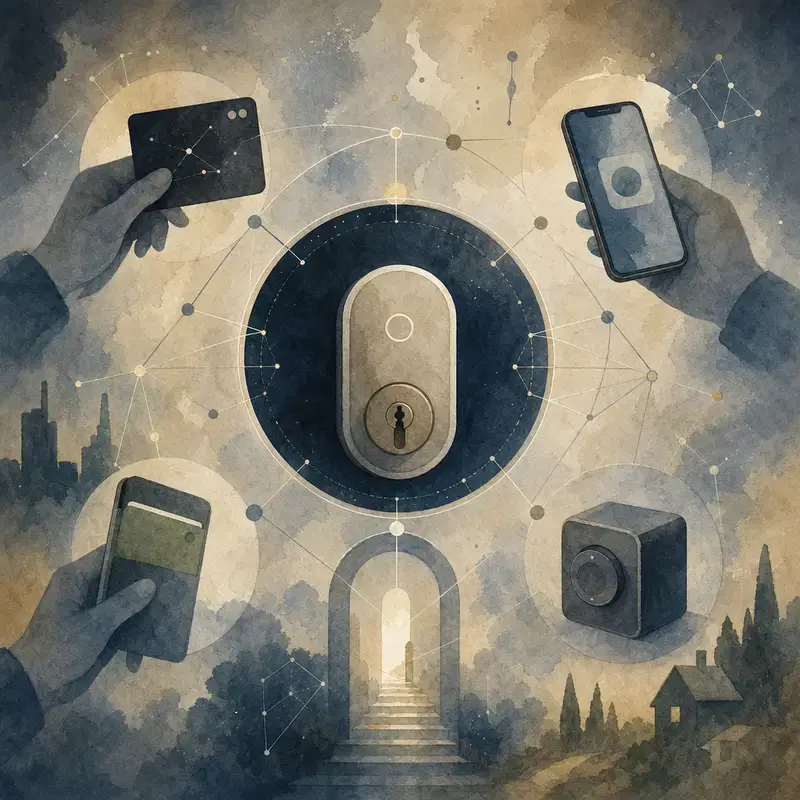
I have a small folder on my phone that feels less like a smart home and more like a junk drawer. One app knows about a lock. Another knows about a camera. A third exists because some device once needed a firmware update and refused to speak through the place where I actually manage my home. The front door is where this gets strangest, because the object we are trying to improve is already one of the most successful user interfaces ever invented: a key. That is why Aliro matters. Not because standards are glamorous, since they usually arrive wearing a lanyard and speaking in compatibility charts. Aliro matters because it asks whether digital access should belong to every lock maker’s app, or whether it should move into the phone and watch systems people already carry. If the Connectivity Standards Alliance can make Apple Home Key, Google and Samsung wallets, Android users, wearables and products such as Nuki’s smart lock feel like parts of the same access model, the smart lock may finally become less app and more key.
The door should not need
a dashboard Privacy Guides reports that the Connectivity Standards Alliance has launched Aliro as a secure, interoperable smart lock standard. The practical promise is refreshingly plain: unlock with a tap of a phone instead of opening an app, typing a code into a keypad or using a thumbprint scanner. That is a small behavioral shift with a large cultural meaning, because it moves the moment of access away from the lock maker’s interface and toward a common credential experience. HomeKit News describes Aliro 1.0 as an open standard intended to unify and simplify digital access control across devices and ecosystems. It says Aliro includes both a communication protocol and a credential format, allowing smartphones, wearables and access readers from different manufacturers to communicate securely. In ordinary language, that means the industry is not merely trying to make one lock nicer. It is trying to make the act of being allowed through a door portable. This is the part of smart home history that tends to be underappreciated. The device is rarely the whole problem. The problem is the stack of tiny permissions, accounts and fallback rituals that accumulate around the device until convenience starts to feel like administration.
Wallets are becoming
the access layer Matter Alpha reports that the CSA, known for Matter and Zigbee, has announced the first official release of the Aliro specification. Matter Alpha frames the goal as unifying smart lock access across mobile ecosystems, with relevance beyond homes to offices, university campuses and hospitality venues. That broader framing is important, because a digital key is not only a smart home feature. It is a social contract about who can enter which spaces, from which device, under which rules. The Android Wallet phrase gets messy here, and precision matters. The sources point to Google and Samsung wallets, plus Android users more broadly, rather than a single product named Android Wallet. HomeKit News also flags broad mobile wallet integration and tags its Aliro coverage with HomeKey, while Matter Alpha places Apple, Google and Samsung wallets in the same access conversation. The direction is clear even if the naming is platform specific: Aliro wants digital keys to live at the wallet level, not inside a separate app for every door. That creates a useful kind of pressure. If wallet based access becomes the expected experience, lock makers will have to compete less on captive apps and more on reliability, design, installation, security posture and how well they fit into the access standard. For Nuki’s smart lock and its peers, the app does not disappear. It becomes less of a tollbooth.
The smart lock app becomes a setup room, not the front porch WIRED’s smart
lock guide describes why people buy these devices in the first place: keyless entry, easier ways to share access with friends and family, and relief from wondering whether the front door is locked. Those needs are not exotic. They are domestic anxiety, houseguest logistics and the ancient human desire not to be locked out in the rain. PCMag’s caution that Aliro will make smart locks easier but is not a reason to rush into upgrades is the right consumer posture. Standards take time to move from specification to products on shelves and doors in homes. A reader shopping today should look for clear Aliro support, wallet compatibility and honest upgrade guidance rather than assuming every Matter smart lock will automatically behave like an Aliro lock. PCWorld’s framing of Aliro as an attempt to fix one of the smart home’s dumbest problems is blunt, but useful. The dumb problem is not that smart locks exist. It is that the industry made the door, the most obvious shared surface in the home, dependent on fragmented software loyalties. A common access model does not make every lock perfect, but it lowers the odds that your household becomes a compatibility chart. The next smart home era may be less about adding intelligence to objects and more about removing negotiations from everyday life. A good standard is boring in the way a good key is boring: it works, it travels, and it does not ask you to admire the mechanism every time you use it. So the question Aliro leaves at the doorstep is not whether smart locks can become more advanced. It is whether the best smart home interface is the one we barely have to open.