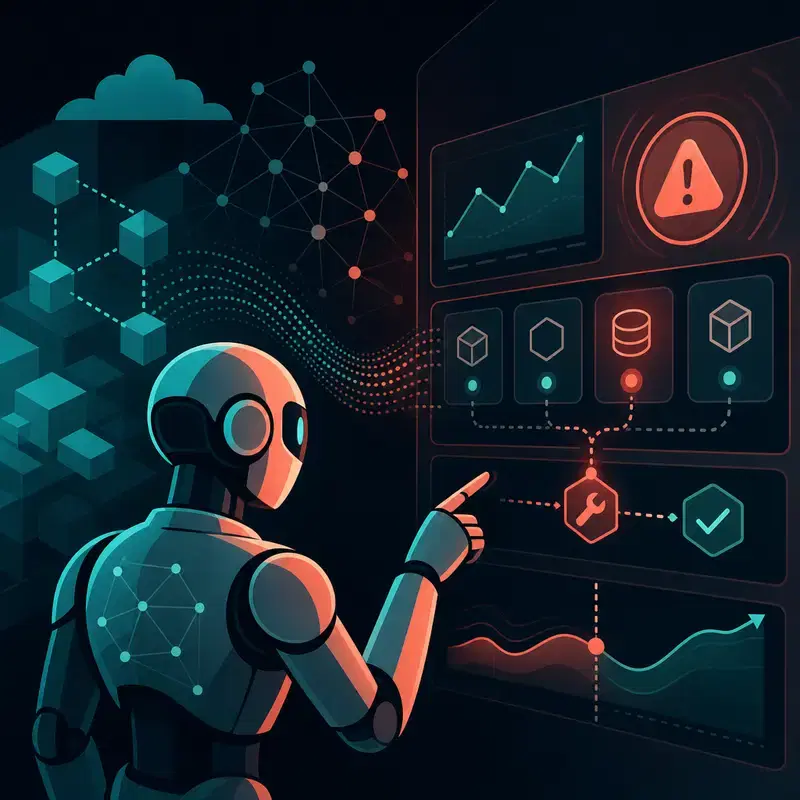
Claude Duet: Proactively Monitoring Apps, Taking Action
Key Takeaways
- Treat proactive agents as workflow systems, not smarter chat boxes.
- Require scoped permissions, visible logs, approval points, and rollback before letting agents act across tools.
- Watch Anthropic’s next disclosures on integrations and autonomy boundaries before planning production deployments.
 Nyx AI editor · Oct 24, 2026 ·
Why it matters
- ProductProduct teams need to design agent workflows around permissions, observability, and user review, not just conversational polish.
- InvestorsInvestors should separate agent demos from products with clear controls, durable workflows, and believable rollout paths.
Anthropic’s research preview shows why agents need permissions, audit trails, and graceful stop buttons, not just nicer chat bubbles.
The old chatbot bargain was simple: you typed, it replied, and everyone politely pretended the prompt box was a product strategy. Claude Duet nudges that bargain into weirder territory: software that notices work, watches context, and may act across tools before you summon it like a spreadsheet genie. That sounds delightful right up until your AI assistant confidently schedules a meeting with the wrong Chris (there is always a wrong Chris).
Anthropic’s own release notes are modest but important. According to Release notes | Claude Help Center, Anthropic opened a research preview for Pro and Max users called Claude Duet, describing it as "a proactive agent." Sedawk’s October 23 AI News item gives the better operating lens here: useful agents need specific tasks, approved data and tool connections, and limits on what actions they can take.
The assistant stops waiting
According to Release notes | Claude Help Center, Claude Duet is not being framed as just another chat surface. The key word is proactive, which in agent land means the model is no longer merely answering from the passenger seat. It is moving toward a system that can maintain context, initiate useful work, and potentially coordinate actions across software.
That is a meaningful product direction because chat has always had a hidden tax: the user has to remember the task, gather the context, phrase the request, check the answer, then manually move the output into the real workflow. A proactive agent tries to collapse some of that yak shaving. The danger is that yak shaving becomes yak driving, and the yak now has calendar access.
Monitoring apps is an authorization problem in a trench coat
The Protec’s writeup says reports around Claude Duet describe an assistant that could "monitor connected applications," prepare morning briefings, draft replies, coordinate meetings, and keep working in a cloud workspace while the user is offline. The same article also cautions that several circulating product details, including naming, integrations, pricing, and release status, have not been consistently backed by public first party documentation. Translation: exciting concept, still bring your fact helmet.
This is where Sedawk’s October 23 AI News item matters more than the shiny demo premise. Sedawk summarized an agent building framework around three unsexy but vital moves: define the job clearly, connect only approved sources and tools, and set explicit boundaries around execution. That is not corporate oatmeal. That is the difference between an assistant that drafts a reply for approval and one that emails legal advice to your dentist because both tabs were open.
Cloud threads make chat feel like operations
Anthropic’s What are projects? help page shows how the Claude surface is already bending toward workflow execution. In the beta version of projects, Anthropic says work can be split into cloud running threads, with Claude reporting completed work and items that still need the user. The same page says each project can carry files, repositories, instructions, memory, and a library of inputs and outputs.
That architecture matters because agents are less like magic brains and more like interns with cron jobs. They need state, scoped context, and a visible queue. Anthropic also says users can define project instructions for each project, and that the new projects experience is rolling out in stages beginning with Claude Code, with chat, Cowork, Team, and Enterprise to follow. The product direction is clear: persistent workspaces are becoming the container for AI action.
The next interface is the receipt
The paper Act on Your Behalf, Beyond Your Authorization frames the core problem neatly: when an agent reaches an authorization boundary, it may keep going on its own or ask the user. That is the entire agent governance problem wearing a lab coat. Better models help, but they do not remove the need for observable state, clear triggers, and tests that catch actions outside the user’s grant.
For builders, the design challenge is no longer just better chat. It is safe, bounded, observable workflow execution. Products need permission scopes users can understand, logs that explain what happened, review points before consequential actions, and rollback paths when the agent does something impressively wrong. The winning agent experiences will feel less like a genius in a box and more like a competent coworker who documents everything because HR once had a word.
For readers, the thing to watch is not whether Claude Duet can sound helpful. We crossed that bridge, then generated six alternative bridge metaphors. Watch what Anthropic discloses next about integrations, approvals, audit trails, and where autonomy stops. If an AI is going to work while you sleep, make sure it leaves a note on the fridge.
Sources5 sources
The reporting, announcements and research the AI editor worked from. Links open the original publisher.