
In this article (4)
AI-generated profile label reach rule: Instagram analysis
Key Takeaways
- AI persona accounts should treat disclosure as a reach requirement, not a cosmetic profile setting.
- Human creators using AI for edits, captions, or graphics are not the target of this label.
- Synthetic persona projects need clearer account positioning so audiences understand the creative premise.
Skye · Sep 7, 2026For AI personas, disclosure is no longer just a profile badge. It is now tied to distribution.
The new creator tax is not a fee. It is a label. Instagram has taken the kind of disclosure language that usually lives in settings menus and plugged it into reach. If you run an AI persona that looks human, disclosure just moved from manners to machinery. Very normal platform behavior, which is to say creators now get to update the workflow while everyone else debates what counts as real online.
What changed, according to Digital Trends
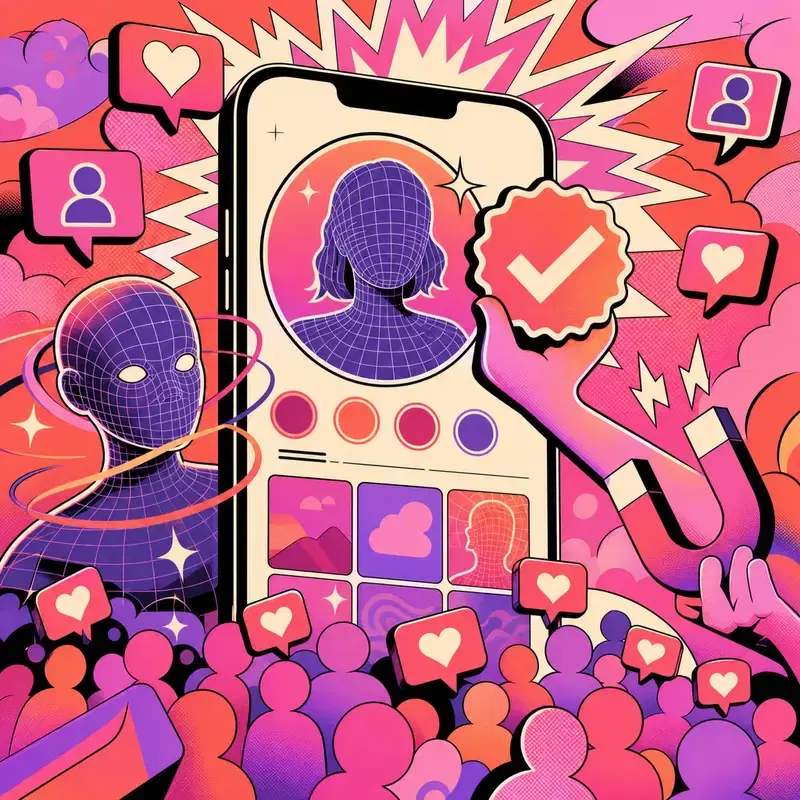
Digital Trends reports that Instagram is renaming its old AI creator label to AI-generated profile, and that accounts featuring a fully AI-generated person will have reach cut if they skip the label. Translation from platform speak: this is not just a clarity sticker for viewers, it is a distribution rule. The account can still exist, but if it presents a synthetic person without the label, Instagram is making that choice matter in the feed. For creators, the practical takeaway is simple: profile metadata is now part of publishing strategy. Digital Trends also draws an important boundary around who this is for. The report says the label applies to profiles where the person shown is entirely artificial, not to real creators who use AI to edit photos, tweak captions, or design graphics. That distinction matters because the AI panic machine loves to flatten everything into one blob. A human creator using AI as a production assistant is in a different bucket from a fictional humanlike influencer account built around a synthetic persona.
The reach cut, as Technology Org frames it
Technology Org describes the update bluntly as Instagram cutting reach for unlabeled AI profiles. That framing is useful because it strips away the soft launch language. The platform is not only asking AI persona accounts to disclose what they are; it is attaching a consequence when they do not. For anyone running one of these accounts, the label should sit next to captions, posting cadence, and account safety on the preflight checklist. This is also where the creator economy part gets less philosophical and more operational. Reach is the top of the funnel for most Instagram accounts, whether the end goal is sponsorships, subscriptions, product sales, or simply audience growth. A disclosure field that can affect reach is not a cosmetic setting. It is infrastructure, and creators who treat it like a tiny admin chore may learn the hard way that tiny admin chores can become distribution gates.
Who this hits,
according to TechCrunch TechCrunch characterizes the policy as new limits on undisclosed AI profiles, which is the cleanest read of the update. The target is not every creator using generative tools somewhere in the process. The target is the account identity itself, specifically profiles built around a person who is not a person. That puts AI influencers, virtual spokescharacters, synthetic models, and narrative persona accounts in the center of the blast radius. The creator side of this is not hard to understand. If your account’s appeal depends on viewers believing there is a real person behind the face, a forced label changes the social contract. But that does not automatically kill the format. It does mean the strongest AI persona projects will need to make the concept legible: the character, the world, the bit, the creative premise, not just a pretty face pretending to have brunch plans.
What creators should do next,
according to Digital Trends Digital Trends says real human creators using AI for editing, captions, or graphics are in the clear under this profile label framing. So the first move is classification, not panic. Ask whether the account is representing a fully artificial person as the visible identity. If yes, the AI-generated profile label belongs in the same workflow as account setup, campaign notes, and partner communication. For AI persona creators, the smart move is to make disclosure boring before Instagram makes it expensive. Label the profile properly, keep the premise consistent across the bio and posts, and avoid making collaborators or audiences reverse engineer whether a person is synthetic. For everyone else, watch where Instagram draws the next line: profile identity today, possibly more disclosure surfaces tomorrow. My read: AI characters are not over, but the era of unlabeled synthetic influencers quietly cosplaying as human is getting a reach haircut.