
In this article (4)
League Classic voting gets Old School RuneScape style
Key Takeaways
- Judge League Classic by its voting rules, not only by its Season 3 nostalgia checklist.
- Legacy modes work best when players understand how changes are proposed, approved, and maintained.
- Watch July 11, 2026 for more details on how Riot frames the mode’s future.
Remy · Jul 13, 2026Riot’s throwback mode looks like Season 3 nostalgia, but the sharper idea is letting players shape what changes next.
Somewhere, a retired top laner just felt old rune pages rattle in the walls. League Classic sounds, at first, like Riot Games opening the attic and handing everyone a dusty Season 3 controller, which is dangerous because nostalgia lies more than a fed Shaco. Games.gg reports that League Classic is a new Featured Game Mode built around Season 3, with old kits, old items, old runes and masteries, the original Summoner’s Rift, and Influence Points returning. That is the bait. PC Gamer’s report points to the actual hook: this is not simply an old version of League of Legends, because players will vote on new patches in an Old School RuneScape style model.
The twist is governance, not nostalgia
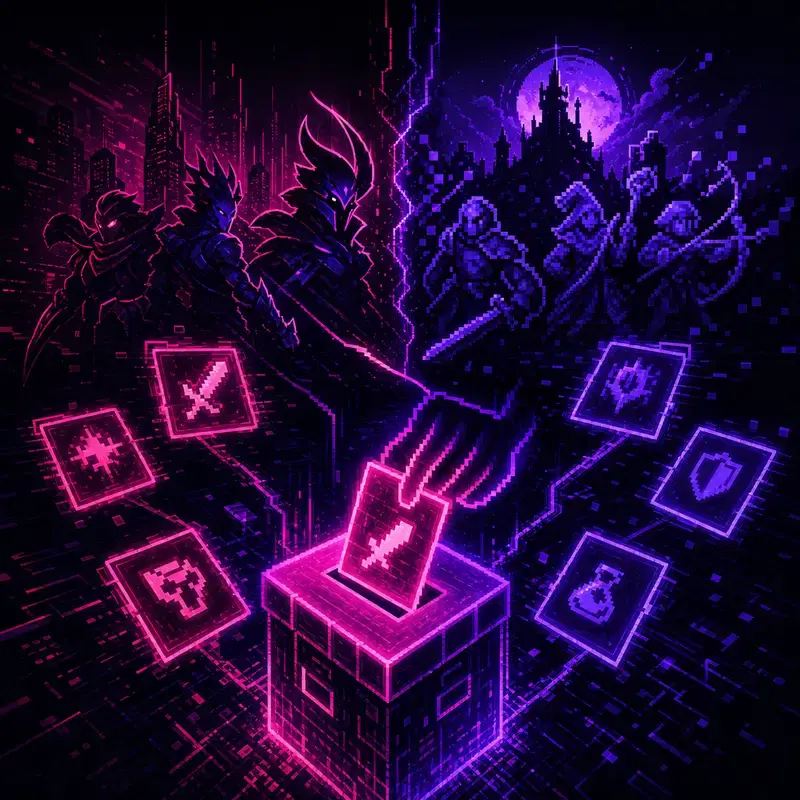
PC Gamer reports that League Classic has a release date and that its counterintuitive design choice is player voting on new patches, Old School RuneScape style. That matters because a pure old build becomes a snow globe: pretty, sealed, and eventually boring unless you are the kind of sicko who wants to argue about 2013 itemization forever. Voted patches turn the mode into a live product with community consent built into the steering wheel. Provisional rating: 8 out of 10 dusty rune pages, pending whatever chaos happens when players are asked to approve balance changes they will immediately blame on junglers. Games.gg adds the crucial shape of the nostalgia package: League Classic is positioned around how League played around 2013, stripping away more than a decade of reworks, item overhauls, and system changes. It also reports that all 60 confirmed champions, classic items, and summoner spells are part of the mode, with more details set for July 11, 2026 during the MSI 2026 Finals. That gives builders a clean lesson: legacy modes do not have to be museums. They can be product lines, if the rules for change are clear enough that players trust the result.
Riot already knew old League was not plug and play Riot’s own Ask
Riot: Classic Mode post from 2017 is the receipt drawer here. Ghostcrawler, Riot Asyrite, and Reav3 said Riot had looked at old patch modes through internal playtests, but older builds were not easy to run because so much game content and code had changed. They also explained that Riot could not simply pull in old data and expect the current game engine to behave. Translation: classic mode is not a folder labeled Season 3 that someone forgot to delete. It is software archaeology with a ranked queue attached. That technical context is why the voting angle is more interesting than the throwback checklist. If Riot has to rebuild and maintain the mode anyway, then community voting becomes a way to decide which changes are worth the engineering bill. It also forces a useful constraint: every proposed patch has to be explainable to the people who will live with it. That is healthier than surprise patch notes dropping like a tax audit, even if the voting UI could still become the DMV of balance decisions if Riot overcomplicates it.
The patch problem League cannot dodge Riot’s
League of Legends Patch 26.9 notes show how wide modern League updates can get, with changes across champions, items, systems, and runes. The same notes mention old favorites like Deathfire Touch and Stormraider’s Surge returning alongside new starting items and alternate champion builds. That is normal League now: a giant machine where one systems tweak can send five roles into group therapy. League Classic cannot avoid that reality just because the map has vintage wallpaper. Kotaku’s report on League patch 5.16 is a useful historical warning label. Kotaku described that patch as an unusually large attempt to break the meta, with reworks for Garen, Darius, Skarner, and Mordekaiser moving from public beta into the main game. That is the risk with any classic ruleset: the moment you patch it, someone will say the soul is gone, usually while building the most cursed item path known to mankind. Player voting does not eliminate that fight, but it changes who owns the tradeoff.
Verdict: watch the voting rules, not just the champion list
PC Gamer’s report makes League Classic feel less like a nostalgia dump and more like Riot testing player governance inside one of gaming’s most battle hardened live games. Games.gg’s confirmed Season 3 package gives the mode a strong identity, but the long term question is not whether old runes make people cackle in champion select. The question is whether Riot can propose patches clearly, gather votes fairly, and avoid turning every update into faction warfare between purity goblins and balance adults. For players, the smart move is to watch the rules around voting before declaring victory or doom. For developers, the case study is even cleaner: if you revive an old game state, decide whether you are preserving history or operating a new branch of the product. League Classic is aiming for the second option, and if Riot gets the governance right, this could be more useful than another limited mode that vanishes after everyone remembers why old balance was a crime scene.