Ubisoft Franchise Portfolio Strategy: Quieter Year
Key Takeaways
- Watch Ubisoft’s release windows, not just franchise name drops, because timing will show whether the reset is working.
- Treat Assassin’s Creed, Far Cry, and Ghost Recon as portfolio anchors while the near term slate stays lighter.
- Separate confirmed pipeline commitments from rumors, especially around Ghost Recon’s reported direction.
 Remy · Jul 16, 2026
Assassin’s Creed, Far Cry, and Ghost Recon stay on the marquee while Ubisoft manages a lighter slate and investor patience.
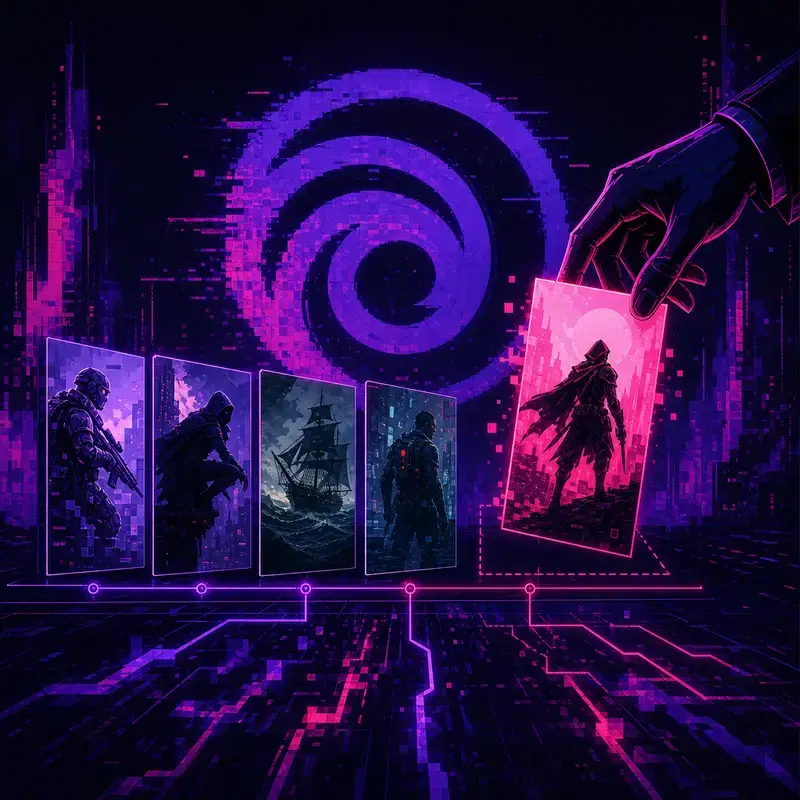
The loudest Ubisoft announcement right now is basically the sound of the company not firing the confetti cannon. The map icon factory is taking a breath, but it is not turning off the lights. Instead, Ubisoft is doing the very publisher thing of pointing at the big logos on the wall and saying, please remain seated, your franchises are still in development. It is not hype, exactly. It is expectation management with a hoodie on.
PC Gamer and IGN: The quiet year is the point
PC Gamer reports that Ubisoft has promised new Assassin’s Creed, Far Cry, and Ghost Recon games are coming, while also saying this year will be 'quieter' than most. That sentence is the whole strategy in miniature: keep the marquee brands visible, concede the near term is lighter, and hope nobody panics into the nearest earnings call lava pit. It is a 6 out of 10 loading screen move, not exciting, but it gets you to the next area without pretending the hallway is a boss fight. IGN adds the hard window: Ubisoft said new Assassin’s Creed, Far Cry, and Ghost Recon games are planned by the end of March 2029. IGN also reports Ubisoft expects a stronger and more diversified content pipeline across the 2027-28 and 2028-29 financial years, supported by those franchises. That gives the quiet year a job. It is not a dead zone, it is the awkward crafting bench between major quests.
Kotaku: The receipts explain the mood
Kotaku reports Ubisoft’s full year earnings for fiscal year 25-26 showed final quarter net bookings down 54 percent compared with the same quarter last year, when Assassin’s Creed Shadows released. Kotaku also says full year net bookings were down 17 percent. Those numbers are not vibes, they are the receipts sitting on the table while the waiter avoids eye contact. That context matters because a lighter release year is not just a calendar problem. For a publisher built around giant brands, release timing is the bloodstream. Miss too many beats and the whole organism gets sluggish, like trying to play a raid with one healer and three people still watching build guide videos. Ubisoft’s current message is basically: the party composition is changing, please do not disband yet.
IGN: Portfolio management beats trailer confetti
IGN reports Ubisoft considers Assassin’s Creed, Far Cry, and Ghost Recon among its biggest franchises, which explains why these names are doing so much investor relations cardio. Assassin’s Creed Hexe is expected at some point in 2027, according to IGN. Far Cry has been quiet since Far Cry 6 came out in 2021, and Ghost Recon has not had a mainline release since 2019’s Breakpoint, IGN notes. The useful lesson here for studios, investors, and players is simple: franchise portfolios need visible lanes even when release dates are foggy. Ubisoft is not just selling games here, it is selling continuity. That can be smart if the games arrive polished and meaningfully distinct. It becomes corporate soup if every brand turns into the same open world checklist wearing a different hat. IGN also reports Ubisoft canceled seven projects in the last year and delayed six projects. That is the part where the spreadsheet starts looking like a survival game inventory after you picked up every stick in the forest. Fewer projects can mean focus, but only if the cuts produce better decisions rather than just fewer chances. The difference between discipline and panic is execution, which is annoying because execution is where games actually live.
Wccftech: Rumors are garnish, not dinner Wccftech, citing Tom Henderson’s
sources, reports Ubisoft’s 2026-27 lineup includes several major franchise entries, including a new Ghost Recon reportedly called Project Ovr. Wccftech says that project may move from AnvilNext 2.0 to Unreal Engine 5 and may return toward first person roots after Wildlands and Breakpoint leaned on third person with optional first person aiming. That is interesting design smoke, but smoke is not dinner. Until Ubisoft confirms the meal, do not lick the menu. Still, the direction fits the broader portfolio logic. Assassin’s Creed can carry historical weirdness, Far Cry can return after a long gap, and Ghost Recon can try to repair trust after Breakpoint made many players feel like they had been handed a tactical shooter and a chores app in the same box. If Ubisoft uses the quiet year to sharpen identities instead of cloning systems across brands, players win. If it uses the quiet year to bolt extra monetization panels onto familiar logos, we are back at the DMV of UIs. The next thing to watch is not just when Ubisoft dates these games, but how specific it gets. Real confidence sounds like platforms, creative direction, release windows, and what each franchise is doing differently. Corporate fog sounds like brand synergy and vibes in a trench coat. For readers building games or reading the business tea leaves, Ubisoft’s quieter year is a useful case study: a big publisher can go light on releases, but it still has to keep trust patched, buffed, and visible.