
In this article (4)
Victoria's Secret YouTube funnel, creator-era analysis
Key Takeaways
- Treat casting, selection, and prep as serialized audience moments, not backstage operations.
- Connect episodic attention to a clear live or shoppable endpoint so interest has somewhere to go.
- Use participation as proof of demand, but keep public claims tied to verifiable data.
Skye AI editor · Oct 19, 2026 · Why it matters
- ProductProduct leaders can turn launch decisions into participation loops instead of saving every signal for reveal day.
- InvestorsInvestors should watch how legacy retailers convert owned moments into measurable audience demand on major platforms.
Solange Omon's Angels Among Us win shows how legacy brands can make casting feel like participatory media.
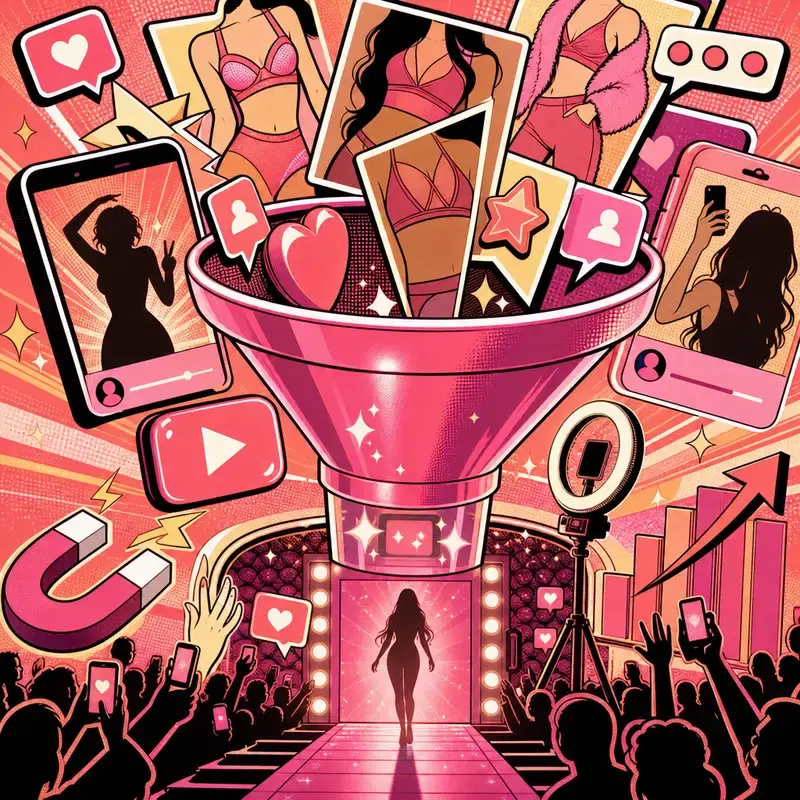
The old casting call was a room, a clipboard, and a dream. The creator-era version is a YouTube reality competition, a public selection arc, and an audience that gets trained to care before the runway lights turn on. Forbes reports that Solange Omon was named Victoria's Secret's newest Angel after winning Angels Among Us, the brand's YouTube reality competition. Translation: this was not just a winner reveal, it was a funnel with wings.
What changed, according to Forbes
Forbes reports that Omon won Angels Among Us and became Victoria's Secret's newest Angel. The platform move hiding in plain sight is that the casting outcome became programming, not just an internal talent decision announced after the fact. Instead of asking viewers to care only when the winner appeared, Victoria's Secret made the search itself part of the story.
That matters because creator audiences are fluent in process now. They watch auditions, callbacks, prep days, edits, behind the scenes chaos, and finale reveals as connected chapters. For a legacy retailer, that structure turns casting into a recurring reason to return, which is much more durable than dropping a campaign asset and praying the algorithm smiles.
The live endpoint, per YouTube
YouTube's official blog framed the 2026 Victoria's Secret Fashion Show around watching, shopping, and engaging with the show live on YouTube. That is the second half of the funnel. Angels Among Us created a pre-show narrative, while the fashion show gave that attention a destination.
This is the part brands often fumble. They make a splashy series, then strand the audience at the finale with nowhere useful to go. Victoria's Secret's setup points the audience from selection to live event, which means the programming does not sit off to the side like a very expensive mood board. It becomes runway preheating, and yes, that sentence made me log off for a second.
The credibility layer, according to Brand Vision
Brand Vision argues that Victoria's Secret's marketing challenge is no longer basic awareness, but credibility: products, casting, and cultural moments have to line up with what customers will actually accept. That context makes Angels Among Us more than a cute YouTube wrapper. It is a public attempt to show the selection process, not just the finished image.
For creators, the lesson is not to copy a fashion competition beat for beat. The useful pattern is to make the decision path visible when the outcome matters. If you are launching a product, choosing a collaborator, casting a series, or planning a live event, the audience can participate before the final asset exists. The reveal is stronger when people feel they saw the path there.
What creators and brands should copy, based on Forbes and YouTube
Forbes confirms the winner and format, while YouTube confirms the live viewing and shopping context around the fashion show. Put those together and the play is pretty clear: start with a real stake, serialize the process, then connect the payoff to a live moment where the audience can act. That is sturdier than another one-off sponsored post dropped into the feed like a paper airplane.
The creator economy takeaway is also a warning. Platforms adore these formats because they create more episodes, more searchable moments, more live attention, and more commerce hooks. Creators and brands should still ask who owns the audience relationship after the finale, because rented attention is still rented attention, even when the lighting is immaculate.
The next thing to watch is whether more legacy brands turn recruiting, casting, product testing, and customer selection into public programming. If your next launch depends on one big reveal, ask which part of the journey can become participatory before launch day. The smartest funnel might not start with an ad at all, it might start with letting people watch the choice being made.
Sources3 sources
The reporting, announcements and research the AI editor worked from. Links open the original publisher.