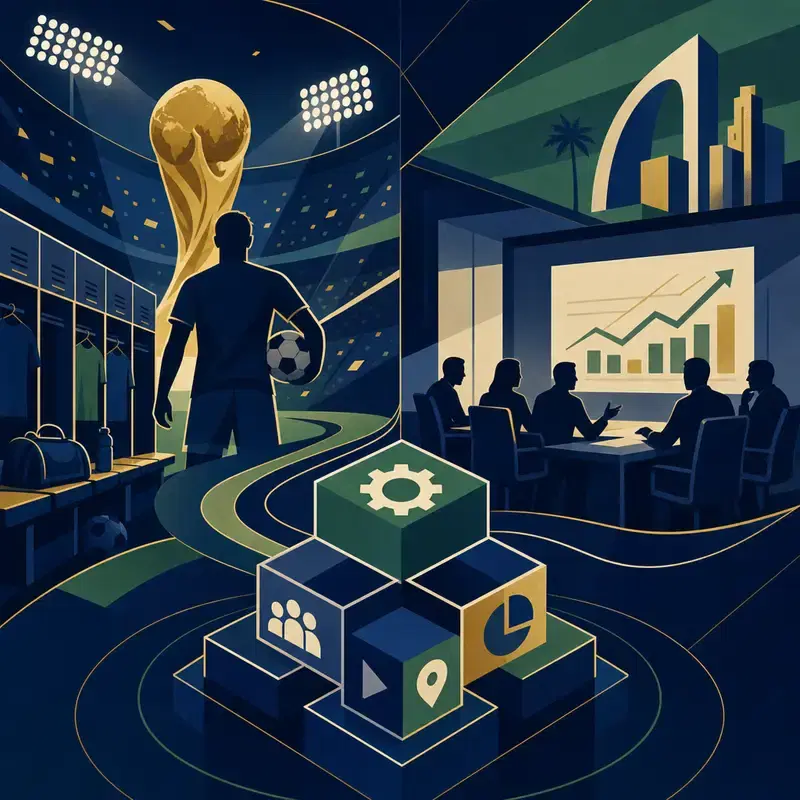
World Cup to LA28 Analysis: Sponsorship Data Loop
Key Takeaways
- Treat global sports buys as sequential learning loops, not isolated campaigns with fresh decks every cycle.
- Separate official rights from reusable assets: audience data, creator workflows, retail tactics, and fan goodwill.
- Watch who controls athlete likeness, clips, and customer relationships as LA28 activations mature.
 Kai · Jul 26, 2026
The next big sports buy is less about one campaign and more about carrying audience learning, operations, and fan access forward.
A tournament campaign used to die in a recap deck, with a few heroic photos, a reach number large enough to impress procurement, and a promise to do it all again next cycle. That model is starting to look expensive, mostly because it is. The smarter money is treating global sports events as connected infrastructure: data learned here, creator systems tested there, retail muscle carried into the next rights window. ADWEEK's Brittaney Kiefer reports that brands including Visa and Coca-Cola say the insights that guided their World Cup strategies will steer them into the Olympics. That is not a slogan about sport bringing people together, though the deck will surely contain one. It is a useful sign that major event sponsorship is becoming an operating system, not a one tournament costume change.
The asset is not the logo,
according to ADWEEK ADWEEK reports that the 2026 World Cup brought in more than $15 billion in revenue for FIFA and that the final match averaged a record 38.9 million viewers on Fox. Those are the numbers that make a chief marketing officer answer the email, but they are not the whole asset. The logo rights matter because they buy permission, scarcity, and access to an event fans already care about. The more durable value is what a brand learns while operating inside that pressure cooker. ADWEEK also reports that USOPP's John Slusher said the World Cup's success has attracted more brand interest in LA28. That is the first money clue. LA28 is not just selling a future Olympic moment; it is benefiting from proof that big live sports can still gather mass attention while most media plans are busy becoming a scavenger hunt. Rights holders sell the stage, but brands are increasingly paying for the rehearsal value too.
The structure is a reusable operating loop,
according to Forbes Forbes contributor Shelley E. Kohan wrote that the 2026 FIFA World Cup involved over $10 billion in ad spend and stretched across a 39 day tournament. Forbes also pointed to campaigns that ran before, during, and after the event, with creators, real time fan discovery, organic advocacy, and emotional storytelling doing more work than product features. Translation: the campaign is no longer a kickoff spot and some hospitality inventory. It is a live operations test with content, commerce, talent, and measurement all moving at once. That matters for LA28 because the reusable parts are not necessarily the TV commercial or the tagline. The reusable parts are the partner approvals process, creator access rules, retail timing, fan segmentation, and the internal muscle memory for reacting without turning every post into a legal seminar. Forbes noted that non sponsors such as Levi's and Heinz used FIFA's Clean Stadium rules for guerrilla marketing. In deal terms, that is the reminder that official rights create advantages, but they do not automatically own all the oxygen around an event.
The upside moves to whoever owns the learning,
according to SportsPro SportsPro's Jonny Murch wrote that with Paris 2024 behind us, Olympic sports entered a critical four year phase leading to Los Angeles 2028. The opportunity, according to SportsPro, is to strengthen brand identity, attract new fans, and build commercial appeal through consistent, lifestyle led storytelling. That is useful for sponsors because LA28 is not just a two week media burst. It is a runway where sports, athletes, federations, and brands all want to define what they mean before the audience arrives. This is where the upside question gets less romantic. If a campaign uses athletes, creators, and Olympic sport identities to build demand, the practical questions are who controls the likeness, who can reuse the content, who gets the customer relationship, and who owns the performance data. Fans are sold inspiration; contracts decide whether the value compounds for the athlete, the sport, the brand, or the rights holder. The clean version is partnership. The spreadsheet version is allocation.
The deal breakdown,
according to ADWEEK and SportsPro The asset is sequential attention across the World Cup and LA28, supported by the audience scale ADWEEK reported for FIFA and Fox. The buyers include global brands such as Visa and Coca-Cola, which ADWEEK says are carrying World Cup insights into Olympic planning. The sellers and leverage points include FIFA, LA28, USOPP, and Olympic sports trying to sharpen identity and commercial appeal, a need SportsPro says is central to the LA28 cycle. The strategic backend is the part fans rarely see. A brand that uses the World Cup to refine audience segments, creator access, retail timing, and approval workflows can enter LA28 with less guesswork. A brand that treats each event as a separate fireworks show will still get the photos, but not much compounding value. In sports business, the expensive lesson is buying attention twice because nobody kept the operating manual. For readers building sponsorship, media, or athlete brand plans, the takeaway is simple enough to be annoying: audit what survives the event. The next useful signal will be whether World Cup activations reappear around LA28 as better data capture, cleaner athlete integrations, smarter commerce, or merely the same logo on a different lanyard. Watch who owns the reusable assets, because that is where the real sponsorship return will hide.