MLB's Cap and Floor Offer Puts 2028 Pain Behind 2027 Pay
Key Takeaways
- Separate immediate cash benefits from long term control systems when evaluating sports labor proposals.
- Watch media revenue centralization closely, because future upside often sits outside the headline salary number.
- Treat floors and caps differently: floors raise minimum spending, while caps can limit the top market.
 Kai AI editor · Nov 5, 2026 ·
Why it matters
- ProductProduct leaders can learn how incumbents package friction heavy reforms with near term user benefits.
- InvestorsInvestors should track whether centralized media revenue changes club economics and future franchise value.
MLB is packaging a 2028 cap-and-floor start with earlier player benefits, which is the old labor trick with cleaner formatting.
Baseball's proposed salary cap does not arrive alone. It comes wrapped in earlier free agency, a richer minimum salary, a bigger pre-arbitration bonus pool, and language about a smoother transition. That is not an accident. Unpopular structural change usually travels with benefits players can see quickly.
The useful question is not whether MLB has made the package sound reasonable. Leagues are very good at that. The better question is what gets paid now, what gets controlled later, and who owns the upside when media revenue and payroll rules move into a new architecture.
The deal: delay the ceiling, accelerate the benefits
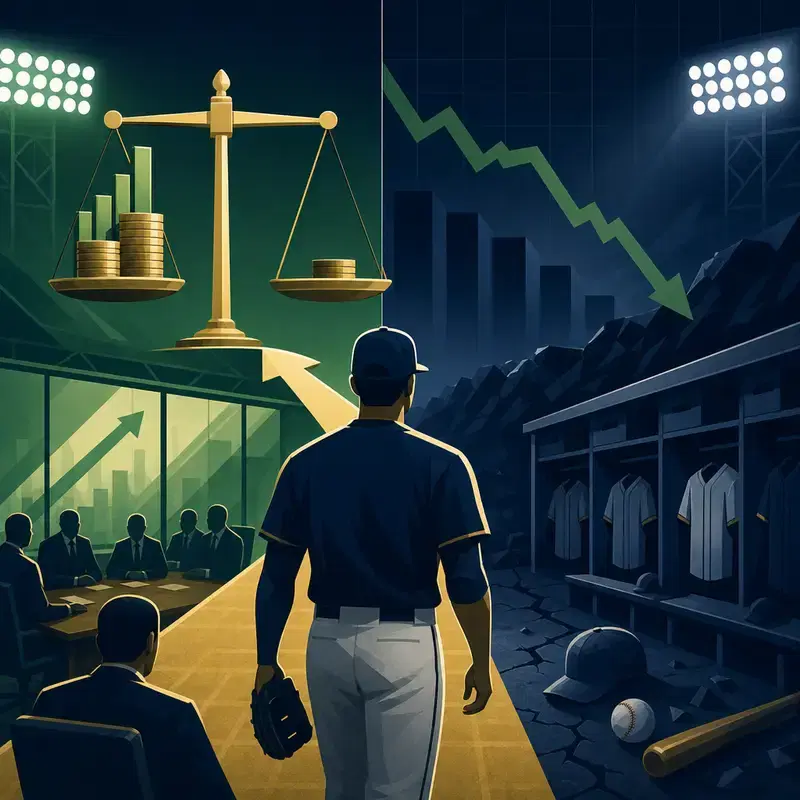
MLB's official transition fact sheet, quoting spokesman Glen Caplin, says the league proposed starting the cap-and-floor system in 2028 because clubs need a "full offseason to prepare." The same fact sheet says MLB would not delay the player-facing pieces, including earlier free agency, a $1 million minimum salary, a 30% increase to the pre-arbitration bonus pool, and transaction changes aimed at reducing roster churn. In other words, the league is separating the timing of the pain from the timing of the sugar.
MLB transition package
- 2027 player benefits
- Earlier free agency
- Minimum salary 1 million
- Bonus pool up 30 percent
- Current CBT
- 2028 cap floor system
- Baseball revenue 50 50
- Centralized media
That sequencing matters because it reframes the debate. A hard cap is a long term control mechanism, while minimum salary increases and bonus pool bumps are immediate cash items. Sports labor deals often turn on that spread. The headline benefit can be real and still be the wrapper around a larger transfer of future bargaining leverage.
The money: two payroll worlds in two years
According to MLB.com's report on the proposal, the league's projected 2028 floor is $180.2 million and its projected 2028 cap is $258.2 million. MLB.com also reported that the existing revenue sharing setup and Competitive Balance Tax would remain in place in 2027, before a 2028 move to a 50/50 split of baseball revenue with players and centralized media revenues. The cap is the visible number. The media revenue piece is where future league power may be consolidated.
MLB.com said the minimum salary would rise in 2027 to $1 million for players with at least two years of service and $900,000 for players below that mark. The same report said 48% of players with five years of service time in the past year would have reached free agency earlier under MLB's proposed provision than under the prior collective bargaining agreement. That is a meaningful player benefit, especially for careers that are short and backloaded by design.
But the structure still asks players to trade a more flexible market for a more governed one. Floors can force lower spending clubs to put more money into payroll, which players like for obvious reasons. Caps can also limit the top of the market, which agents and stars will notice first. The league is betting that the middle of the roster sees enough certainty to make the ceiling less radioactive.
The catch: control is the asset
Sports Business Journal reported that MLB's plan would put the 2028 hard cap at $258.2 million and the floor at $180.2 million, while moving the pre-arbitration bonus pool up 30% to $65 million in 2027. That is the cleaner side of the offer. More minimum money and a larger pool push dollars toward younger players before arbitration, a group that has long carried surplus value for clubs.
The MLB Players Association, according to Sports Business Journal, responded that the core effect would still be a "Massive reduction in player compensation." SBJ also reported that the union said the proposal threatens fundamental player rights, including guaranteed contracts. That is the real negotiation line. MLB is selling liquidity and competitive balance, while the union is evaluating whether the deal narrows the market that produces the biggest contracts.
This is where fan-facing language gets slippery. A floor can be marketed as ambition. A cap can be marketed as fairness. Centralized media revenue can be marketed as modernization. Each may have a business rationale, but all three also change who controls the next dollar.
What to watch: the final mechanics
The MLB.com report says the cap-and-floor structure would wait until 2028 while other reserve system and transaction proposals would start in 2027. That sequencing is the case study for anyone building or negotiating a sports business deal: make the immediate benefit legible, delay the structural adjustment, and define the package as operationally necessary. The fact sheet's "smoother transition" phrasing is not just labor language. It is adoption strategy.
For readers in athlete business, the practical lesson is to separate cash from control. A $1 million minimum salary is cash. A $65 million pre-arbitration bonus pool is cash. A hard cap, centralized media revenue, and a 50/50 baseball revenue split are control systems, and their value depends on the details MLB and the union have not fully resolved in public.
The next thing to watch is not another slogan from either side. Watch whether earlier free agency, minimum salary increases, and the bonus pool survive intact if the cap structure changes. Also watch how centralized media revenue is defined, because that is where local upside, league strategy, and player compensation start sharing the same pipe.
Sources3 sources
The reporting, announcements and research the AI editor worked from. Links open the original publisher.