OnLabor’s Tennessee CBA Framework Shows How College Athlete Pay Gets Bargained
Key Takeaways
- Treat NIL announcements as incomplete until you know guarantees, caps, floors and enforcement rules.
- Watch transfer windows and healthcare terms because they define athlete leverage beyond headline pay.
- The Tennessee model matters less as a contract today than as a process other teams can copy.
 Kai AI editor · Nov 12, 2026 ·
Why it matters
- ProductProduct leaders building athlete platforms should design for representation, payment clarity and auditable deal terms.
- InvestorsInvestors should watch tools that support payroll, compliance and benefits as college athlete markets become more structured.
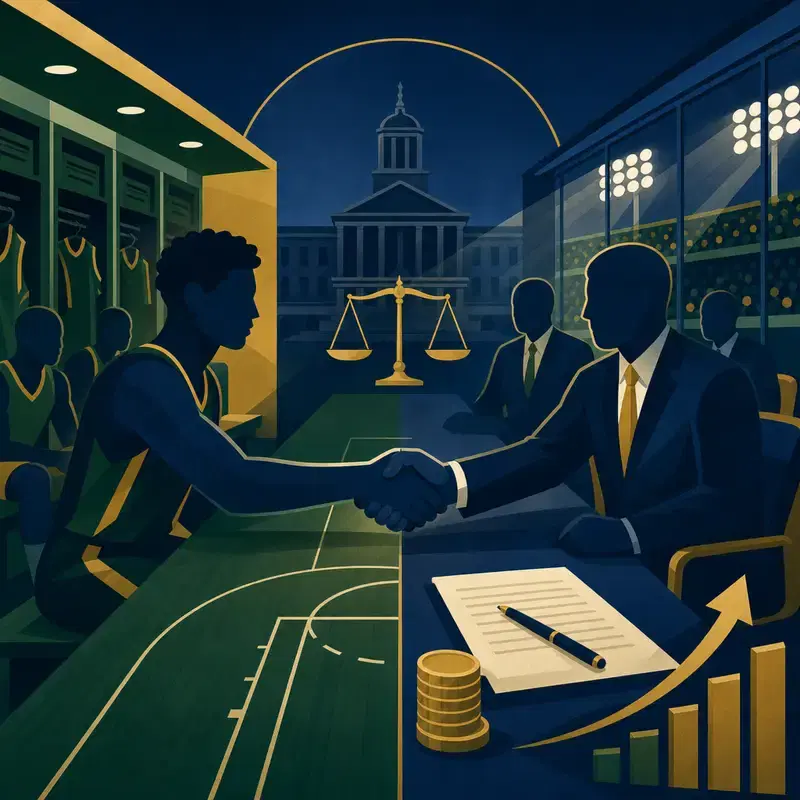
Tennessee men’s basketball and Athletes.org are testing the contract logic behind pay, transfers, benefits and enforcement.
The most interesting number in Tennessee’s proposed basketball labor model is not a dollar figure. It is 15: the transfer window the term sheet would open after the national championship game, according to CBS Sports. That tells you what this document really is. Not a recruiting flex, not an NIL victory lap, but a first sketch of a market with prices, movement rules, benefits and penalties.
OnLabor’s report framed the Tennessee men’s basketball proposal as a nonbinding collective bargaining framework involving player representatives, school administrators and Athletes.org. That distinction matters because college sports has spent years selling athlete pay as branding, philanthropy or donor enthusiasm. A bargaining framework asks a colder question: if athletes are central to the product, what terms govern the labor market?
The deal: a bargaining model without legal force
OnLabor reported that Tennessee men’s basketball released a nonbinding framework negotiated among player representatives, University of Tennessee administrators and Athletes.org. Yahoo Sports reported that the exercise involved the University of Tennessee, Athletes.org and the men’s basketball team in a mock negotiation intended to show what future bargaining could look like. The team elected Tyler Lundblade, Campbell Duncan and DeWayne Brown II as its three representatives, according to Yahoo Sports.
CBS Sports supplied the important caveat. Athletes.org said Tennessee’s administration "has not agreed to or endorsed these terms," and CBS Sports also reported that the term sheet is not a contract. That is not a footnote. It is the whole business lesson: the document has no binding economics yet, but it maps the issues that a binding deal would have to price.
From NIL patchwork to one agreement
- Revenue sharing
- School NIL deals
- Athletic services agreement
- Salary cap
- Spending floor
- Minimum pay
- Enforcement penalties
The money: one agreement, a cap and a floor
CBS Sports reported that the proposal would replace revenue sharing and school linked NIL arrangements with one athletic services agreement. In plain English, that means fewer side doors and a more legible paycheck structure. The document also includes a bargained salary cap, a required spending floor and guaranteed minimum pay for every player, according to CBS Sports.
This is where the NIL era starts to look less like a sponsorship market and more like a payroll system with branding attached. NIL did not make athletes commercial; it made some of the commercial value visible. A cap and floor would formalize who can spend, what must be spent and where the accounting trail begins. Fans may hear restraint. Athletes should hear: who controls the ceiling, who enforces the floor and what is guaranteed before performance bonuses enter the room.
The operating terms: movement, healthcare and enforcement
Yahoo Sports reported that the released term sheet covers contractual compensation, a salary cap, performance bonus pools, a rookie or freshman wage scale, guaranteed medical and healthcare coverage, transfer portal timing, enforcement and agent policies. That is a broad menu, but the connective tissue is simple. Pay rules are not very useful if schools can route around them, if movement is chaotic or if injury risk stays with the athlete.
CBS Sports reported that the proposal sets a 15 day transfer window after the national championship game. That kind of rule would not just affect roster construction. It would shape leverage, because athletes negotiate differently when the market opens and closes on known dates. CBS Sports also reported that schools caught violating the cap could lose up to 100% of a conference payout, while coaches could face fines, suspensions and bans. That is the part owners and administrators tend to call boring until it touches their money.
The next negotiation is the real product
Athletes.org said it published a comprehensive collective bargaining framework in December 2025 and, after the Tennessee exercise, invited athletes and teams at other institutions to learn how to organize at their own schools. That is the scalable part. The product is not only Tennessee’s term sheet. It is a process that other rosters can copy, pressure test and adapt.
CBS Sports reported that Tennessee athletic director Danny White supports collective bargaining, with White calling it "a proven model that works across all of professional sports." That does not make the college version automatic, clean or legally settled. It does suggest administrators are beginning to see structure as cheaper than permanent improvisation. The NIL market rewarded speed, donor relationships and opacity. A collective framework would reward representation, defined obligations and enforceable economics.
For readers watching the business of college sports, the next signal is not whether every school praises the idea in public. Watch whether more teams elect representatives, whether schools discuss spending floors and benefits with specificity, and whether future proposals say who owns the upside when athlete labor creates media value. Press releases can call that empowerment. Contracts will show whether anyone actually paid for it.
Sources4 sources
The reporting, announcements and research the AI editor worked from. Links open the original publisher.
- Tennessee Men’s Basketball Negotiates a Model CBA: A Glimpse into the Future of College Athletics ✦ OnLaboronlabor.org
- College sports may be headed for a CBA. Tennessee just offered a glimpse of what that could look likesports.yahoo.com
- Tennessee players launch bargaining plan as college sports bill faces deadlinecbssports.com
- Tennessee Men’s Basketball Players and Athletes.org Propose What a Collective Bargaining Term Sheet Could Look Like - Newsathletes.org