The Next Sports Media Fight Is Feed Placement, Not App Ownership
Key Takeaways
- Treat live sports as feed-native inventory, not only as a channel or app product.
- Ask who controls ranking, measurement, and audience access before celebrating discovery reach.
- Package live events with clear formats, metadata, and sponsor context so algorithms can surface them.
 Kai AI editor · Nov 5, 2026 ·
Why it matters
- ProductProduct teams should design live sports surfaces for discovery, clipping, context, and measurement from the start.
- InvestorsInvestors should watch whether feed placement becomes a durable acquisition channel or just discounted reach.
Live sports are becoming products for personalized discovery systems, where ranking can matter as much as a rights deal.
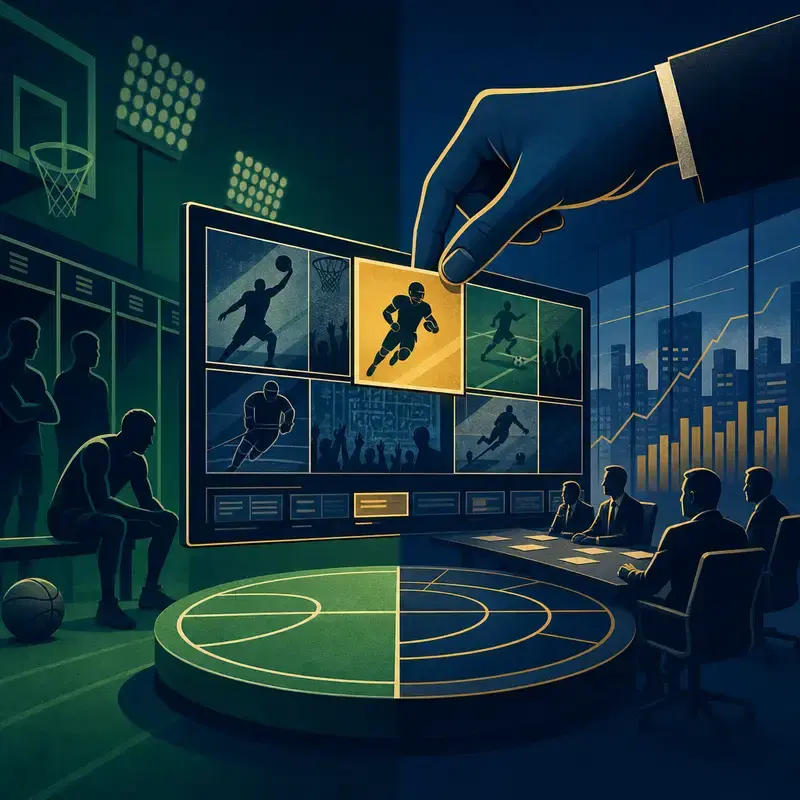
A fan used to choose the game, open the app, and hope the login worked. The new model is more blunt: the game may simply appear between clips, daring the viewer not to keep watching. Yahoo Sports reports that TikTok has begun putting live sports directly into personalized feeds, which makes distribution feel less like a channel lineup and more like shelf space controlled by an algorithm.
That sounds like a product tweak. It is closer to a rights strategy with a different gatekeeper. If live sports can travel through discovery feeds, the next scarce asset is not only the broadcast window. It is placement, performance data, and the ability to make a live event legible to ranking systems.
The deal: live rights meet the feed
According to Yahoo Sports, TikTok has recently begun placing "full, primary event broadcasts within users' feeds," moving some live sports away from a pure destination model. Former MVP strategy chief Mitch Glaser described a viewer who can "be scrolling like normal and land in a live sports broadcast," a small sentence with a large business implication. The fan did not seek out the channel. The platform created the encounter.
How a live event finds viewers
- Live broadcast
- Main feed
- Scrolling viewer
- Algorithm ranking
Yahoo Sports also says TikTok differs from Instagram and YouTube because its discovery model is interest-based rather than follow-based. That matters because follow graphs reward the audience a league or athlete already has. Interest graphs offer the more tempting pitch: reach people who never subscribed, never searched, and may not know the athlete yet.
The money: reach is useful, but control still gets paid
The cleanest example in Yahoo Sports is boxing, where Most Valuable Promotions billed its August 21 card featuring Amanda Serrano vs. Lucrecia Manzur as the first championship boxing production to air live on TikTok. Glaser said the broadcast produced "Over 100m impressions" and reached an audience that was 68% under the age of 35. That is the sales deck version of the story, and to be fair, it is a good slide.
The money question is less glossy. Impressions are not rights fees, and a younger audience is not automatically a better contract. For leagues, teams, promoters, and athlete brands, the leverage comes from knowing whether feed distribution creates measurable audience growth, sponsor value, or downstream subscriptions. If the platform controls ranking, reporting, and audience access, the rights holder may own the event while renting the front door.
Most Valuable Promotions has not abandoned conventional distribution. In a press release, MVP said Amanda Serrano vs. Skye Falzon will take place Saturday, January 9, 2027, live on DAZN from Coliseo de Puerto Rico. That is the more familiar sports media stack: a named event, a named platform, and a direct viewing destination. The interesting part is not that one model kills the other. It is that promoters can use feed-native reach as top-of-funnel marketing while still reserving marquee inventory for platforms built around paid or appointment viewing.
The packaging: women’s tennis shows the sponsor logic
SVG Europe reports that the WTA and TikTok announced a global content partnership designed to expand how fans discover and experience women’s tennis. The first useful tell is not a match stream, but the WTA Finals draw ceremony, which SVG Europe says TikTok will exclusively livestream on 3 November ahead of the 2026 WTA Finals in Indian Wells. That is not a traditional rights jewel. It is a programmable moment, easy to clip, explain, and circulate.
SVG Europe also says the WTA has passed one million TikTok followers, with more than 250 million combined video views and engagements year to date, a 41% year-on-year increase. Those numbers explain why a league would treat the feed as more than a social team side project. A draw ceremony can introduce players, seed storylines, and give sponsors a cleaner context than a random highlight dump. The old broadcast package sold scarcity. The feed package sells repetition, context, and algorithmic surface area.
This is where athlete personal brands separate from league strategy. A tennis player can trend because of style, personality, or a single point, but the WTA needs repeatable formats that make the tour discoverable beyond existing fans. The platform wants content that keeps people moving through the feed. The sponsor wants to know whether it is buying adjacency to tennis, access to younger users, or simply a nice logo placement on someone else’s machine.
What to watch next
Yahoo Sports frames this as an emerging discovery-platform model, but the open business questions are still doing the heavy lifting. Rights fees, ad inventory, revenue sharing, and measurement for feed-distributed live sports have not been clearly disclosed in the cited reports. That is not a scandal. It is the part of the market where the real terms usually hide until someone has enough leverage to name a price.
For readers building in sports media, the practical lesson is to stop treating distribution as a binary choice between owning an app and selling to a broadcaster. The next battleground is whether a live event can be packaged so a ranking system understands it, a casual viewer samples it, and a rights holder still captures enough value to justify the experiment. Watch for leagues asking for better feed analytics, sponsors demanding proof beyond impressions, and platforms testing how much live inventory their users will accept before the scroll starts to feel like cable with better thumbnails.
Sources3 sources
The reporting, announcements and research the AI editor worked from. Links open the original publisher.